A Healthy Relationship with Making Music, Practising, and Teaching
The IN.TUNE Blended Intensive Programme “Shared Resources for Healthy and Optimal Performance”
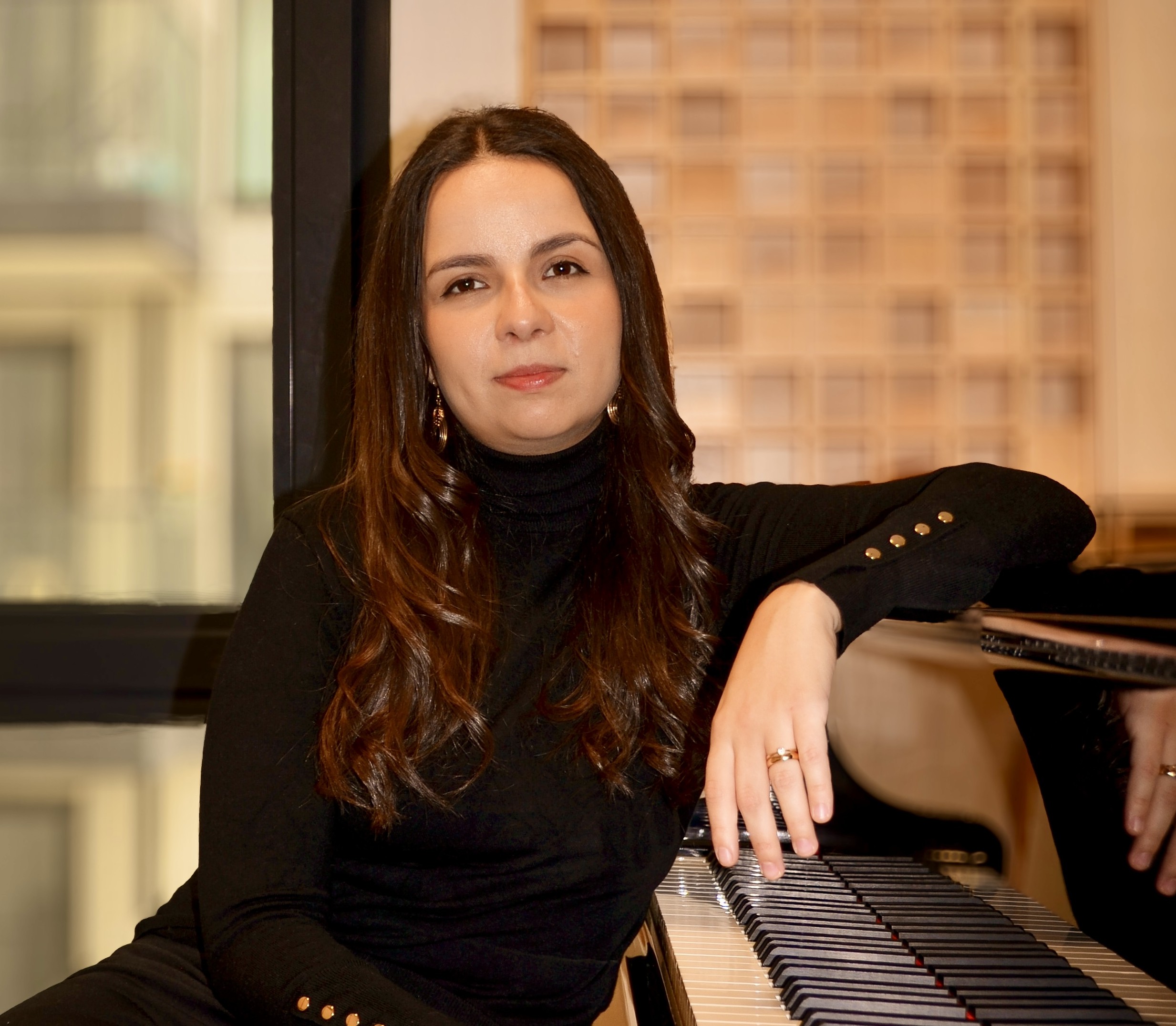
The pianist and music educator Antonia Praus Antonucci is from Chile and studies in the “Musician Educator” master’s programme at the Royal Conservatoire The Hague. In the 2026 summer semester, she participated in the IN.TUNE Blended Intensive Programme (BIP) “Shared Resources for Healthy and Optimal Performance”. Students from various instrumental programmes at the IN.TUNE partner universities, along with mdw teachers and other experts from the IN.TUNE partners, devoted themselves to the important topic of musicians’ health.
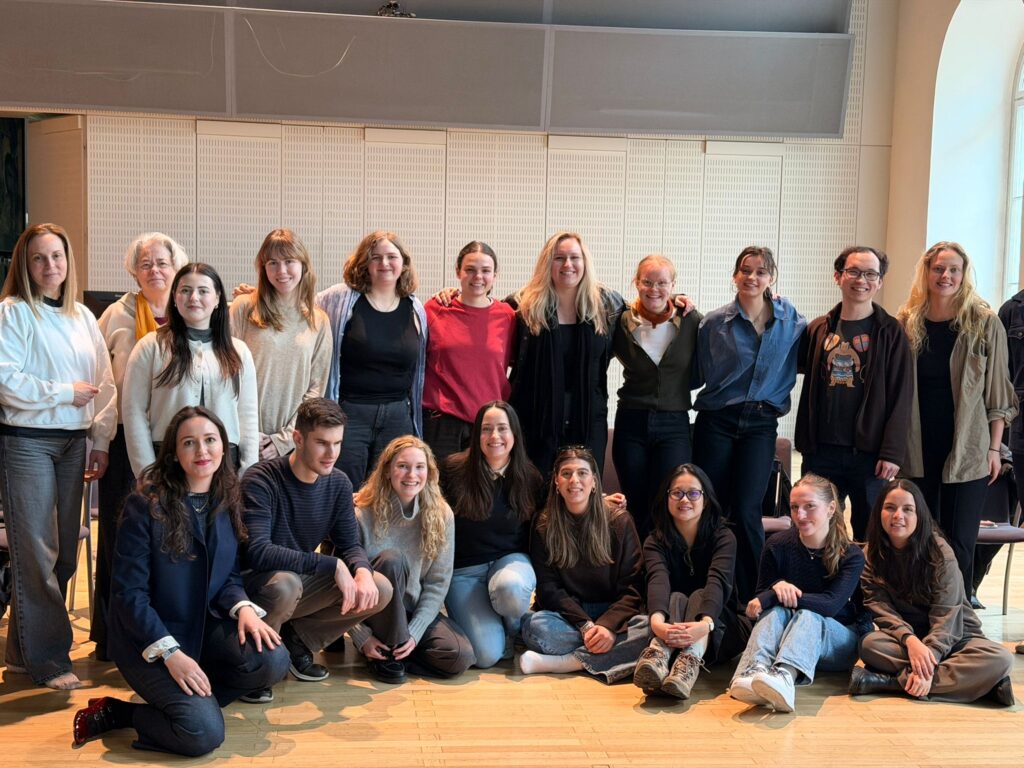
“In my training as a pianist, the questions surrounding musicians’ health were not very strongly addressed until now. As a music educator, I would like to pass this knowledge on to my future students as well,” says Antonia about her motivation to complete the IN.TUNE BIP, which consisted of interactive online webinars and an intensive workshop week at the mdw.
The health and well-being of musicians do, in fact, represent a crucial but frequently neglected aspect of musical training. The course content aims at providing the students with tools for more healthy learning, teaching, and performing.
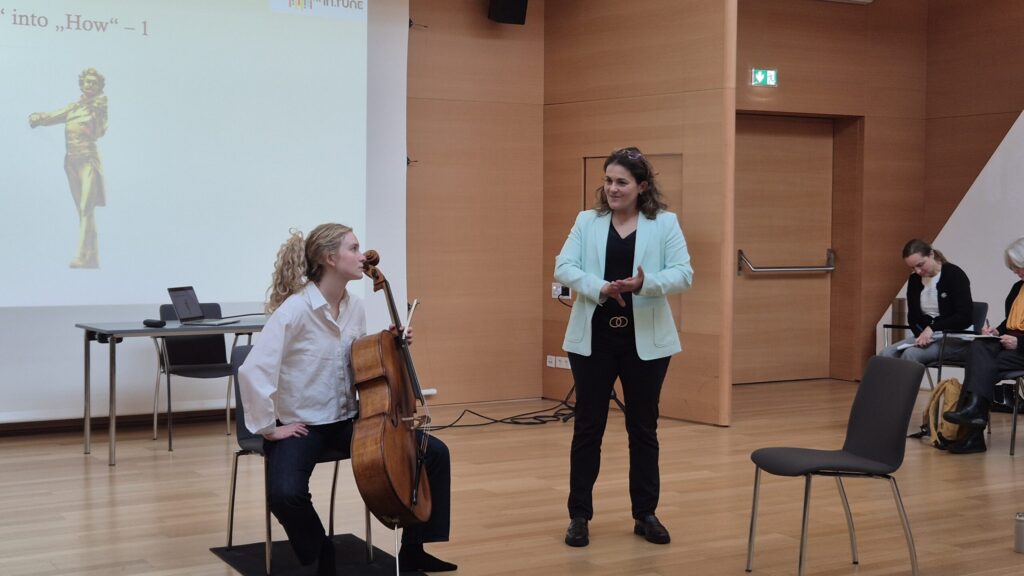
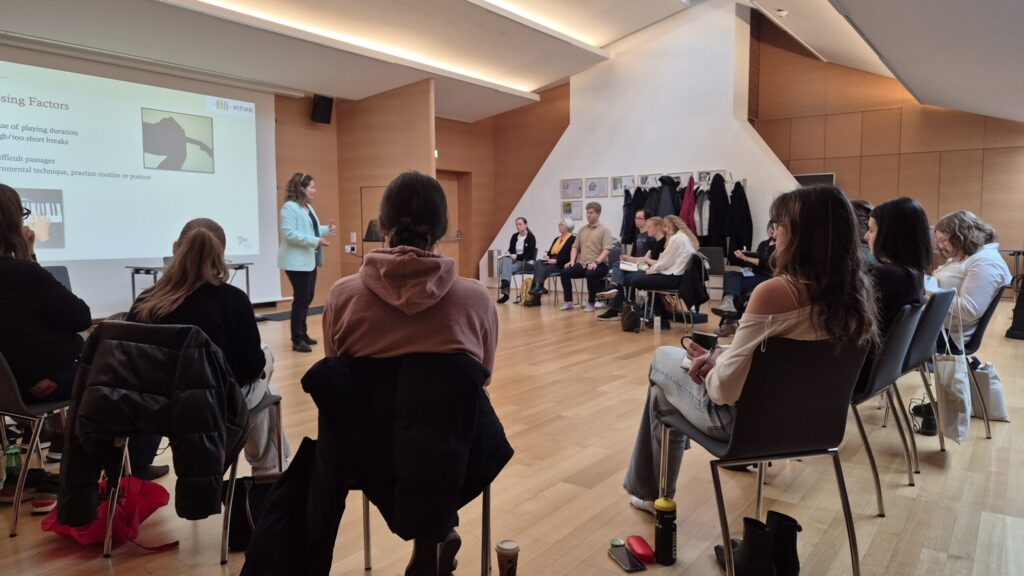
Pianists are familiar with the physical ailments in the neck and shoulder area that come from sitting for hours at the piano, tendinitis, and mental strain from practising without breaks. In the BIP, the students shared their own personal experiences. “We talked about healthy practise techniques. The health of one’s ear, or the experiences with various stools and chairs with regard to sitting for long periods impact all of us, regardless of the instrument,” says Antonia. As a pianist, who naturally practises alone, she particularly appreciated hearing the experiences of other musicians, for example those who play in orchestras.
A number of exercises that Antonia learned in the BIP have already been helpful. mdw instructor Coretta Kurth demonstrated visualisation exercises to counter stage fright. One of them was imagining going onstage with one’s group of “protective animals”. Antonia: “Before an examination, my piano recital, I already was able to try out this exercise. It makes you feel in a way protected on the stage, and this improves one’s performance.” Another exercise that was shown was aimed at physically reducing stress before a performance by imagining that one is battling a tiger. “Of course, it is strange jumping around and waving your arms like crazy before a performance, but after this exercise, you can feel how your adrenalin lowers,” she explains.
This was the first time Antonia took part in an IN.TUNE activity. She sees IN.TUNE playing a role in students’ day-to-day life, and appreciates the advantages of the alliance: “It enables us students to build a network. The tremendous musicians that I met during the week I spent at the mdw remain valuable contacts—not only on a musical but also on a personal level. We have common interests and hopefully can work together in the future. It feels good to be among kindred spirits.”
Antonia began her formal training as a pianist at the age of fourteen, but before that, at a very early age, she played the electronic organ, inspired by her grandmother, who was an organist. For her piano lessons, Antonia had to travel a long distance from her hometown of Copiapó in Chile’s Atacama Desert, in the northern part of the country, to the coastal city Viña del Mar in the middle of Chile. Her piano studies later took her to the Conservatorio di Siena in Italy. After she graduated, she taught piano to children in Mexico and realised that she wanted to expand her pedagogical skills. She then began a master’s degree in Den Haag, where she is able to ideally combine her artistic pedagogical interests and abilities. Antonia is open to additional study experiences at other universities, as participating in the IN.TUNE Blended Intensive Programmes provide students with the opportunity to get to know other educational institutions directly and in a practice-oriented manner.
The BIP “Shared Resources for Healthy and Optimal Performance” focused strongly on the students learning from each other. In small groups of students from the various partner universities, they designed, for example, a “library of healthy resources” for their own practise and performance activities. This includes elements such as visualisation exercises, breathing techniques, and general lifestyle recommendations such as a healthy diet and exercise. Positive mental attitudes were also addressed. “Connecting with the audience, being thankful for the opportunity to perform so that people can hear your music, is key. Internalising this attitude helps you to develop a healthy approach to practising, performing, and to music in general,” stresses Antonia. She places great importance on healthy practise techniques in her work as a music educator as well: “I try to maintain a positive energy during the lessons and to train my students to be self-assured musicians. And also, to communicate that mistakes are normal.” She frequently incorporates improvisation exercises into her teaching as well, so that the students feel freer and get to know their instrument better.
For the future, Antonia is interested in taking part in further IN.TUNE Blended Intensive Programmes in order to apply her learning experiences in her everyday student life and her work and to take advantage of her new contacts.
Text: Isabella Gaisbauer
Photo credits: Karolina Sawicka, Barbara Stieber