My Erasmus staff mobility in Stockholm
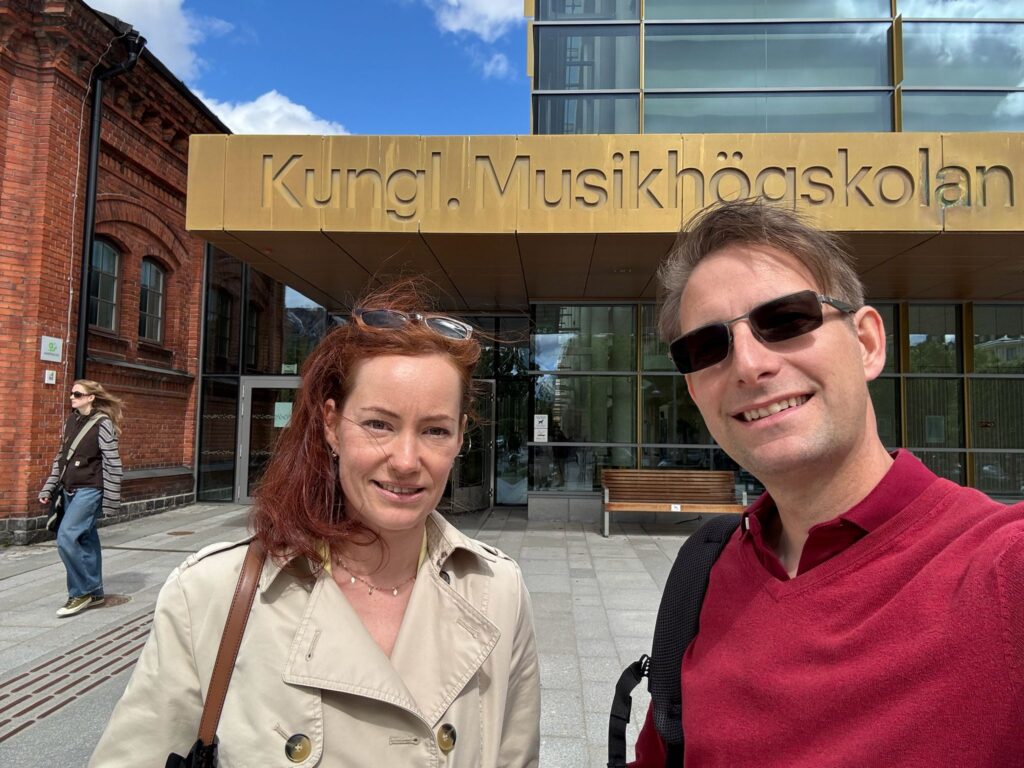
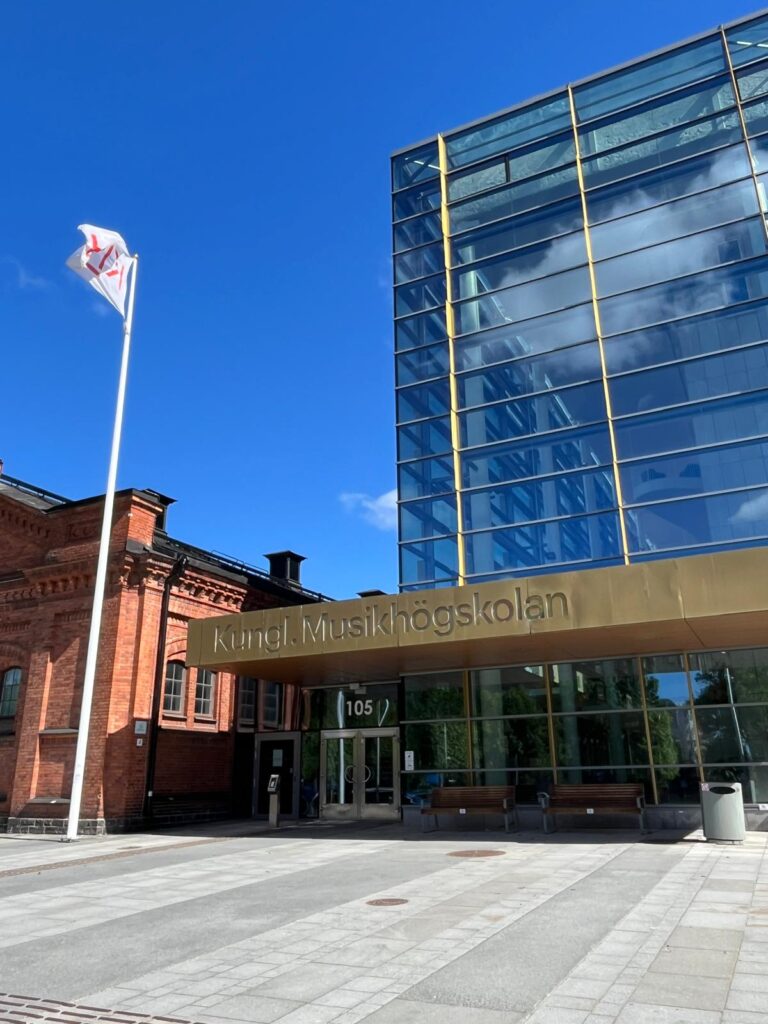
My Erasmus staff mobility at the Kungliga Musikhögskolan i Stockholm (KMH) began on 26 May 2026 with an introductory tour through the institution led by my host, Jon Dahlkvist, Concert Producer at the KMH.
From the very first moment, I was deeply impressed by the atmosphere of the institution, the openness of the people working there, and the remarkable architectural and artistic environment of the campus. The modern building itself reflects the university’s innovative artistic philosophy. Particularly fascinating were the various concert halls and flexible performance spaces, especially the “Black Box”, equipped with state-of-the-art technology for acoustic, electroacoustic, and experimental concert formats. The openness towards interdisciplinary collaboration, innovative concert concepts, and contemporary artistic presentation forms is strongly embedded in both the architecture and the institutional culture of the KMH.
During my stay, I gained valuable insights into the concert production and organisational structures of the university. Jon Dahlkvist coordinates around 300 concerts per year and is currently working intensively on optimising many internal workflows through digitalisation and automation. What impressed me most was the fact that such an enormous amount of concert activity can be managed by a very small team through highly efficient communication structures, optimised workflows, and clear distribution of responsibilities.
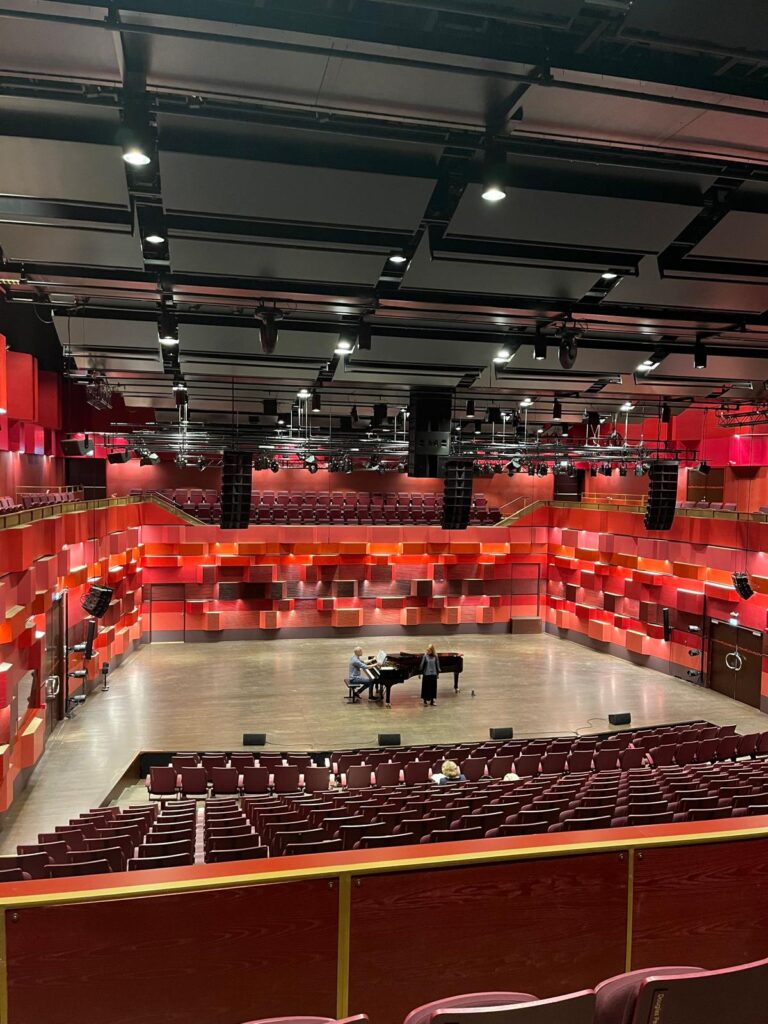
One of the most interesting aspects was the KMH’s effort to create a centralised workflow system functioning as a shared database around each individual concert and event. Instead of relying on extensive email communication between departments, students, and production teams, all relevant information is collected and managed within one shared system. This includes technical requirements, concert programmes, scheduling details, production timelines, and possible programme changes. Responsible staff members and project participants have direct access to this information and can update or modify it in a simple and efficient way. The institution is continuously working on improving the integration of these systems in order to further reduce manual administrative work and simplify communication processes—something I would very much like to explore and gradually implement at the mdw. Such developments require openness towards change, but they offer significant potential for increasing efficiency and reducing administrative workload.
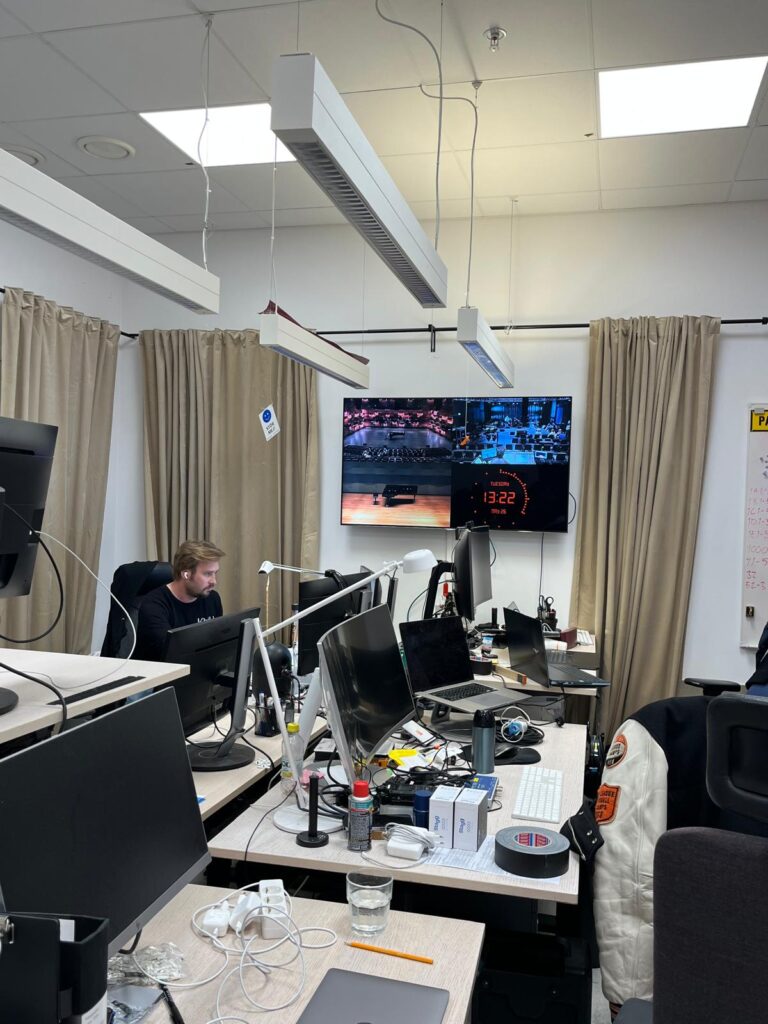
I also had the opportunity to participate in weekly planning meetings involving both the communication department and the production team. It was particularly interesting to observe how early the institution begins planning communication strategies and concert activities, with discussions already focusing on projects and events for the following academic year alongside current organisational matters.
Another aspect that impressed me greatly was the efficiency of the communication department. Despite very limited personnel resources, the institution manages a remarkably large number of events in a highly professional and streamlined way. The KMH has almost completely moved away from printed promotional materials such as posters and concert programmes. Instead, communication is based primarily on digital systems, electronic screens throughout the building, and online promotion. Concert information, photos, and event details provided by students are automatically integrated into predefined templates, significantly reducing design and approval processes while maintaining a consistent visual identity.
Social media communication also involves students directly through supervised “takeovers”, allowing them to actively participate in the promotion of projects and concerts. This creates authentic communication formats while simultaneously reducing the workload of the central communication team.
The organisational structure of the technical production department was equally inspiring. A very small production team coordinates the concerts together with trained student assistants, who support audience management and basic concert operations. This system allows the institution to manage several events per day in an efficient and professional manner.
What I found particularly remarkable was the close connection between concerts and the academic curriculum. Almost all performances are directly linked to study programmes, examinations, or ensemble activities and are supervised by the respective departments and professors. This creates a very clear artistic and organisational structure while ensuring that institutional resources remain focused on educational purposes.
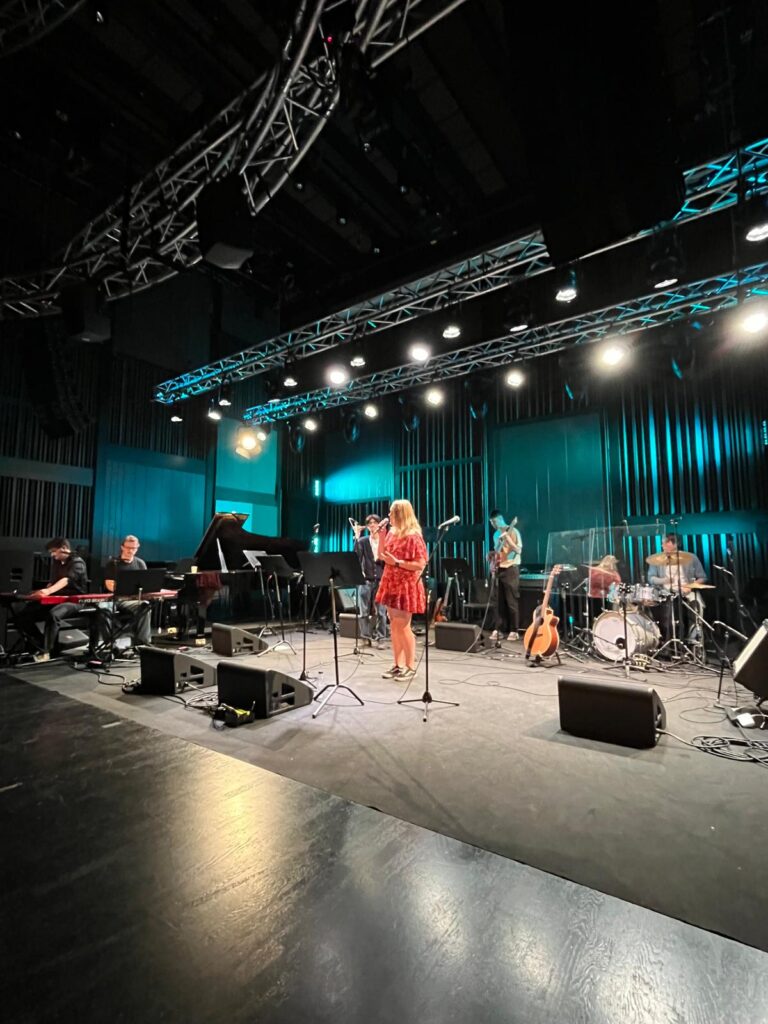
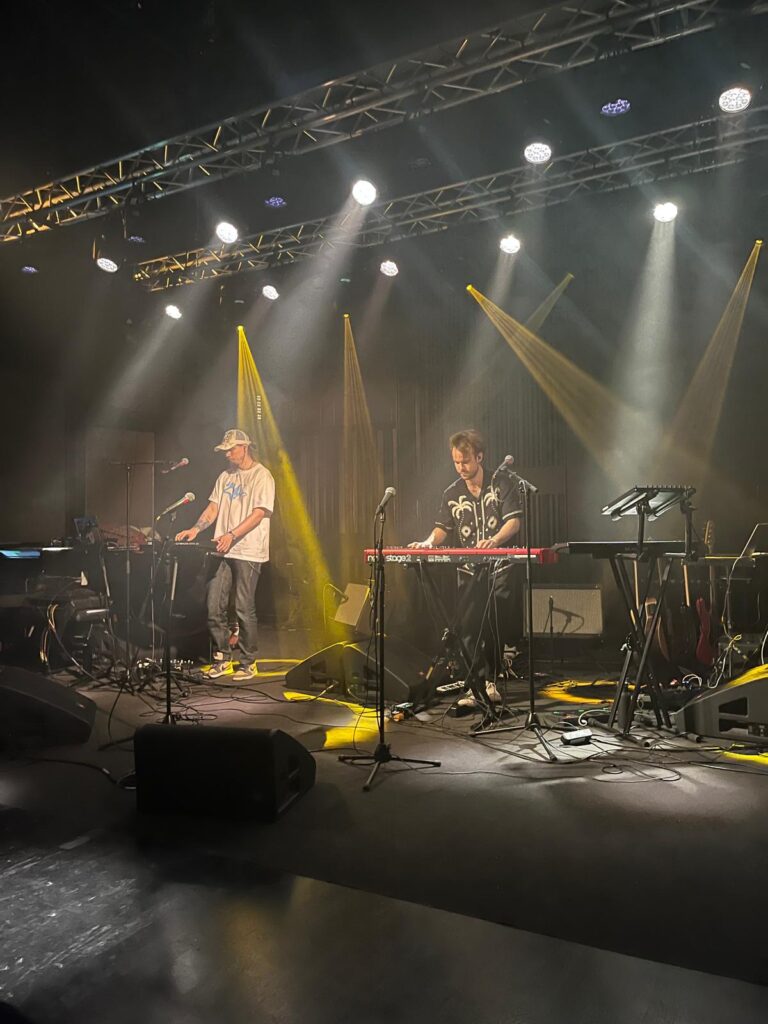
Every evening during my stay, I attended various concerts at the university, ranging from pop concerts with multiple ensembles to public graduation recitals and performances involving electronics and experimental artistic concepts. I was particularly interested in experiencing the institution’s approach to innovative and interdisciplinary concert formats. The concerts were consistently very well attended and attracted a considerable external audience, which demonstrates the effectiveness of the institution’s communication structures despite relatively modest promotional efforts.
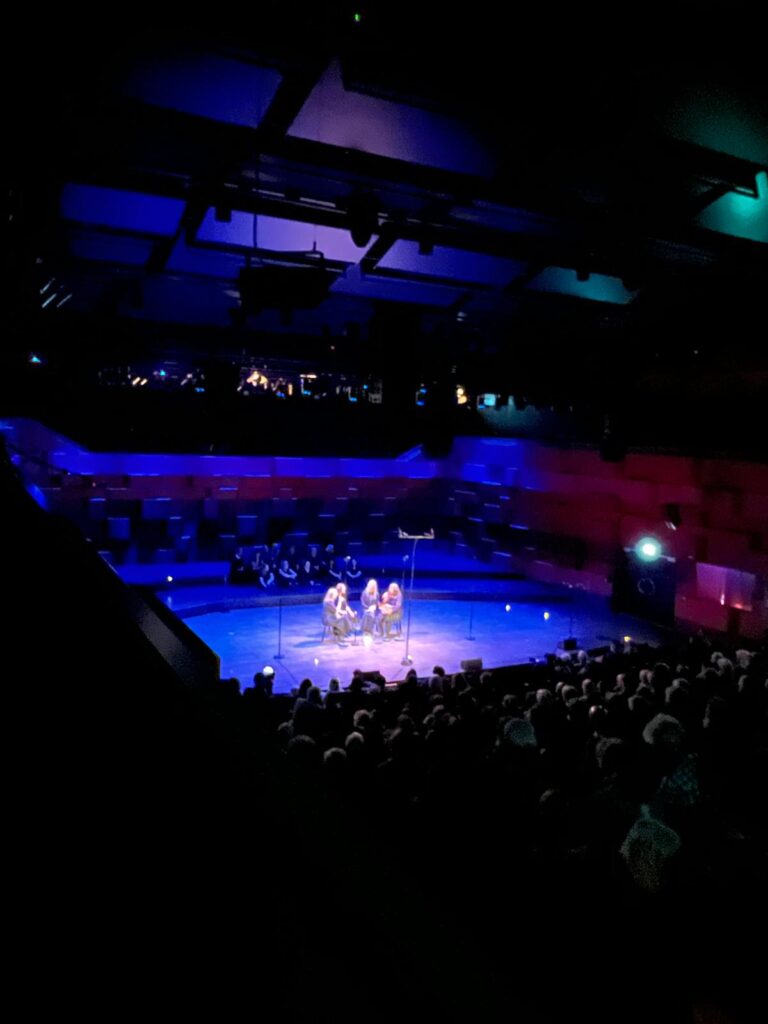
A particularly memorable conclusion to my stay was attending the farewell concert of renowned folk singer and educator Susanne Rosenberg, who concluded more than three decades of teaching at the KMH. The performance offered a fascinating insight into the Swedish tradition of polyphonic folk singing and demonstrated how strongly musical heritage, artistic innovation, and community-building are connected within Swedish music education. It was an inspiring and fitting final artistic experience of my visit to Stockholm.
Although the KMH and the mdw are not directly comparable in terms of size, structure, and institutional orientation, I found it especially inspiring to observe how efficiently communication and coordination between departments are organised despite the extremely large number of concerts and projects taking place throughout the year. The institution’s focus on workflow optimisation, digital process management, and clear organisational structures offered many valuable ideas and approaches that could potentially be adapted within our institutional context.
An especially important aspect of the mobility was the exceptionally warm and professional support provided throughout my stay. I felt very welcome at the KMH from the very beginning. Despite his extremely demanding workload, Jon Dahlkvist dedicated a great deal of time and effort to giving me as many insights as possible into his work and the organisational structures of the institution.
What impressed me most was the fact that one person coordinates such a large part of the concert and event operations of the university. Managing around 300 concerts per year requires not only extensive professional experience but also highly optimised workflows, excellent communication between departments and very efficient organisational structures. Observing these processes in practice was one of the most valuable experiences of my mobility.
The openness, generosity, and hospitality of Jon Dahlkvist and his colleagues made this Erasmus stay particularly inspiring and memorable, both on a professional and a personal level. I am sincerely grateful for the warm welcome, the outstanding support, and the opportunity to gain such valuable professional insights during my stay at the KMH. I would also like to express my gratitude to the mdw for making this mobility possible and for supporting international exchange opportunities that allow staff members to gain new perspectives, develop professionally, and bring innovative ideas back to their own institutions.
Are you mdw staff and interested in visiting one of our partner institutions?