Women’s Film History Scholars Connecting on Many Levels
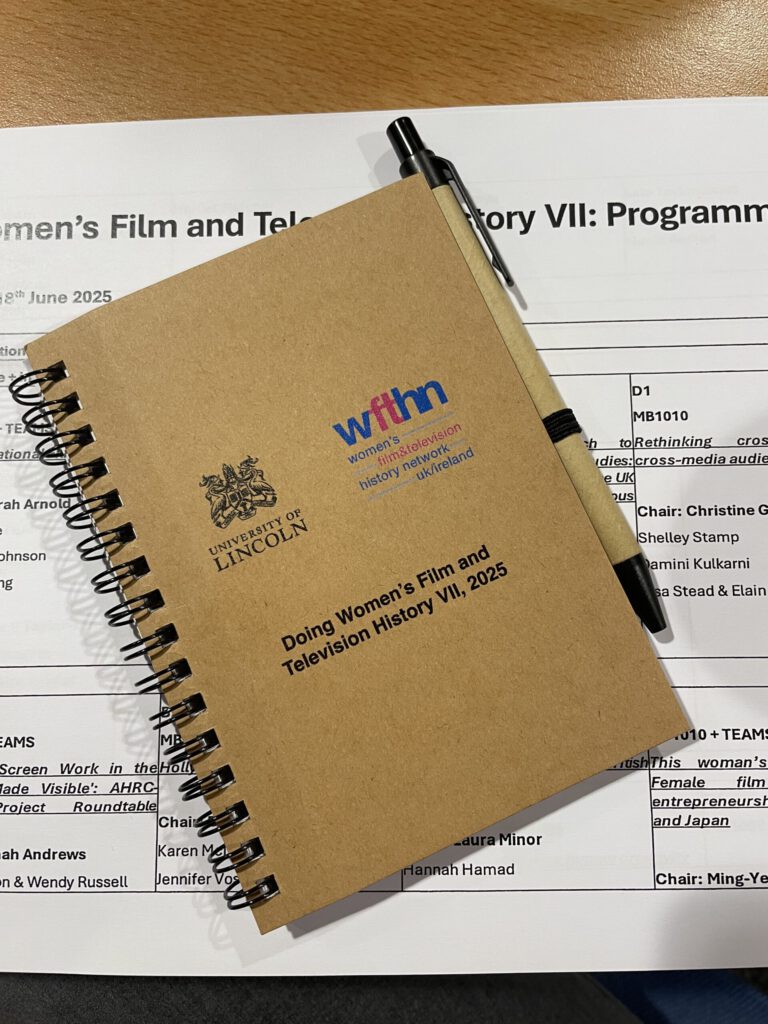
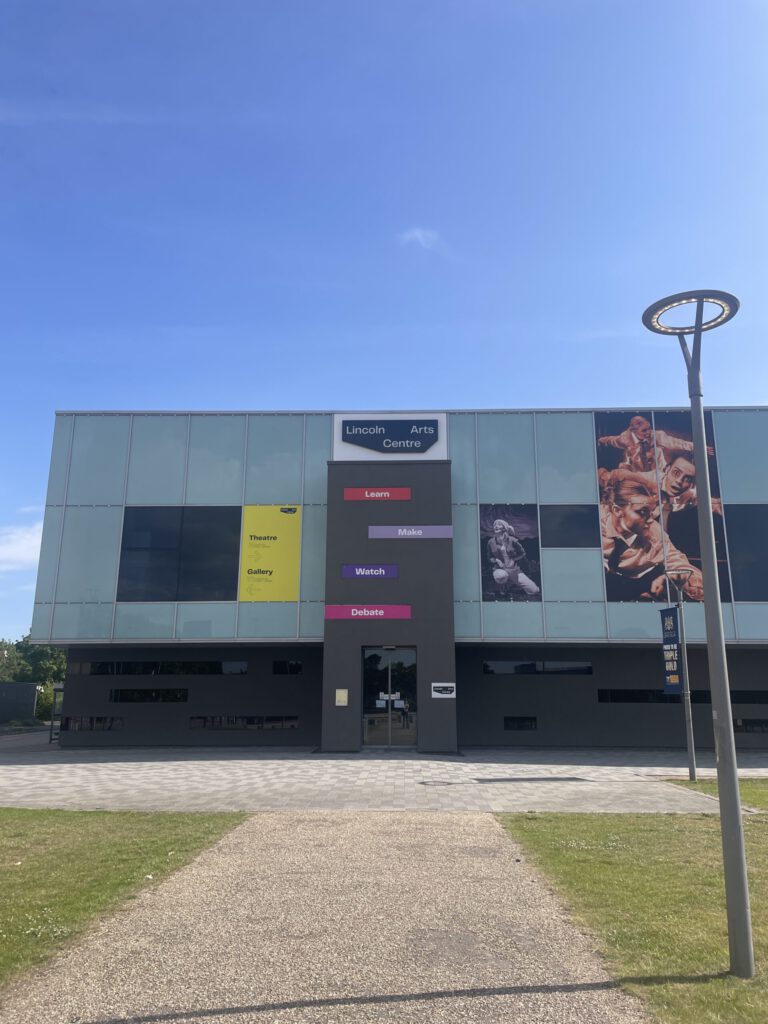
From June 18th to 20th, the Doing Women’s Film and Television History Conference, organised by the Women’s Film and Television History Network-UK/Ireland took place for the seventh time. Three days of presentations, films, discussions, and dinner conversations at the University of Lincoln enriched my perspectives on current research methods and broadened my knowledge of a variety of film-related historic agents and topics.
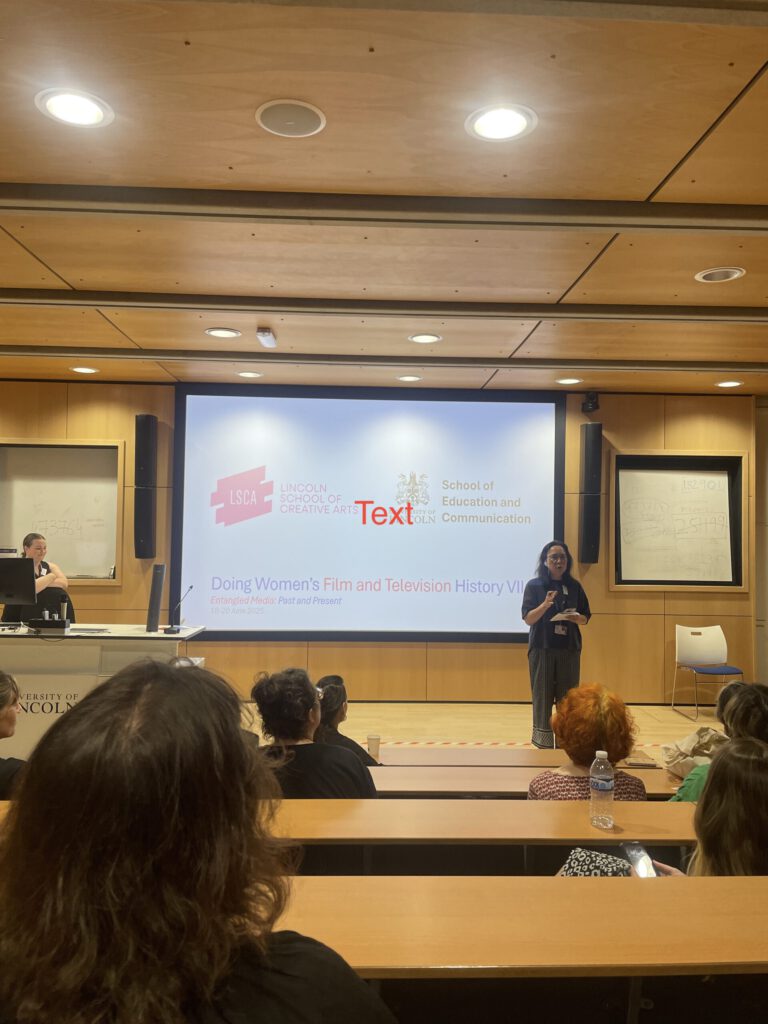
Film studies is a small field compared to other academic disciplines, and women’s film history can be considered a niche, even though it has quite a history itself. From the 1970s onwards, UK-based pioneering scholars like Christine Gledhill, Shelley Stamp, Linda Ruth Williams, or Yvonne Tasker shaped feminist film theory with their profound reflections on present and past filmmaking and writings on film history. Their work inspired international scholars of the past and present. All of the above-mentioned joined the conference this June and some of them, if not yet retired, shared their current work. The conference organisers, foremost Hannah Andrews and Jeongmee Kim of the University of Lincoln, were able to create a relaxed, non-hierarchical, and highly professional atmosphere: early stage researchers as well as established professors engaged with each other in formal and informal settings. This was of great benefit for everyone, especially for those new to the conference and the minority of guests from outside the UK/Ireland. As one of those fitting in both categories, everything was new to me. I had been familiar with some names appearing in the programme but didn’t know any faces or particular projects yet. This changed immediately and easily. Conversations about practices and approaches revealed that many of us shared relatable ideas and similar challenges. Throughout the panels and keynotes, numerous questions were raised and discussed, for example: “How do we find history when it’s not organized in archives?” “How much should we rely on oral history?” “How do we listen to silence?” “How can we use speculation as a fruitful approach to historic research?” “What does the study of women in film mean to us today?” “How do we mine and undermine archives?” “What does doing history mean?”
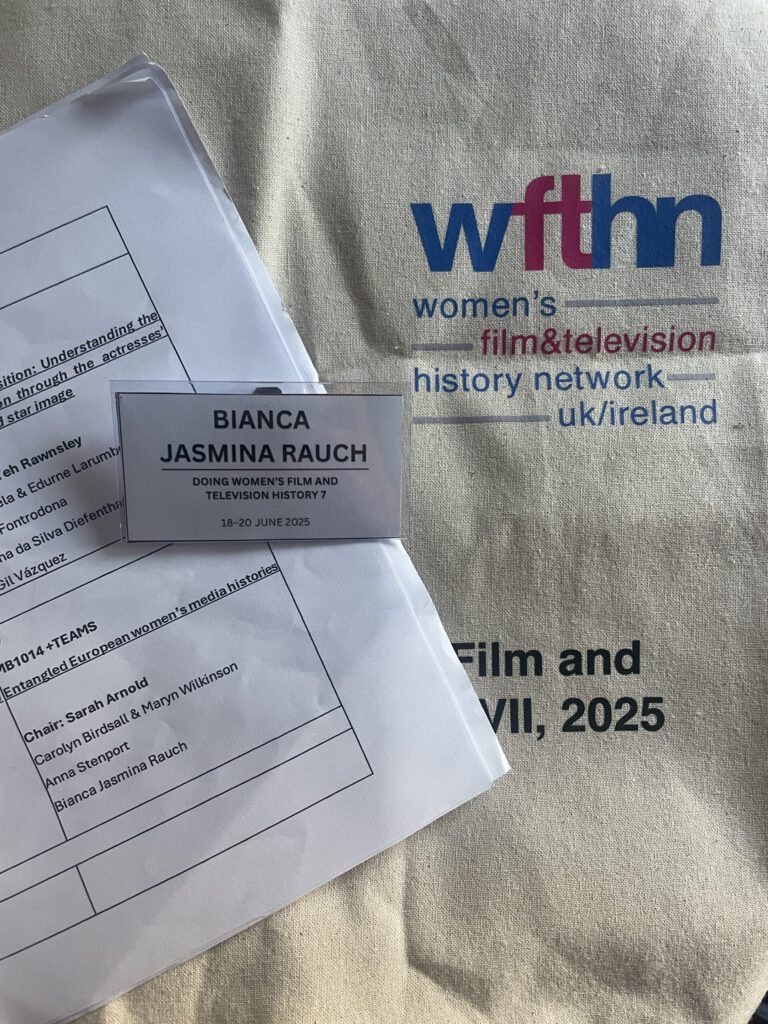
My presentation was part of the panel “Entangled European Women’s Media Histories”, which put together research in Sweden (Anna Stenport), Sweden and Quebec (Scott MacKenzie), the Netherlands (Carolyn Birdsall and Mary Wilkinson), and my own on Austrian filmmakers. In my paper titled “Exploring the Work of Austrian Film Pioneers from the 1970s and 80s”, I explored the television film productions of Austrian female directors of that era within an international context. By focusing on production structures and the thematic orientation of Käthe Kratz’s television plays, I highlighted the connections between contemporary socio-political developments and their impact on the work of women directors in public broadcasting. It was not until 1981 that the Austrian Film Fund (today ÖFI) began providing financial support for productions independent of the Austrian Broadcasting Corporation (ORF). Until then, the ORF held a dominant position. Its television drama department was intellectually respected across Europe during that time and welcomed socially critical perspectives and topics. In 1987, Gerald Szyszkowitz, head of ORF’s television drama department from 1973 to 1987, described the broadcaster’s dramaturgical stance as “critical realism”, which aimed to portray Austria’s past and present from the perspective of the powerless. Beginning in 1976 with the TV film Glückliche Zeiten (“Happy Times”), Käthe Kratz dedicated her work not only to female experiences and feminist demands but also, with her five-part series Lebenslinien (1983–88), to historical portrayals of Austrian life, with a particular focus on underrepresented social classes.
The purpose of my presentation was not only to share a part of the historical research conducted for my dissertation at the Film Academy Vienna (“Resistant gazes: Female search for identity in coming-of-age films”) but also to raise awareness of women’s filmmaking and the structural challenges it faced in Austria. In the discussion following the talk it became clear that there are indeed structural similarities in production contexts across various European countries, such as Ireland and the Netherlands. The topic generated considerable interest and led to further conversations with other panellists and participants. I considered it quite fruitful to compare historical developments with experts on specific national fields (nations pragmatically understood as financial providers of production structures) to gain broader, transnational perspectives on women’s filmmaking.
During those three days in late June, a major heatwave swept across the UK. Hot, steamy conference rooms made parts of the day a burden for both hosts and guests, who regularly excused themselves and slowed their responses as their overheated minds longed to cool down. Despite this unexpectedly un-British weather, the benefits of this summery event were undeniable. It offered many new ideas and perspectives—not only on women’s history but also on the diverse realities of academic life. In that sense, we carried not only enthusiasm for further research back home but also a bitter aftertaste. Comparing the (lack of) funding opportunities and the precarity of academic research across national contexts—especially in light of recent political developments—raised serious concerns about the future of feminist film studies. At the same time, this comparison sparked a renewed motivation to continue (re-)writing history, to illuminate its dark corners, and to advocate even more strongly for funding in our field. I am grateful that my research trip to Lincoln was supported by the Office of Research Support at the mdw—thank you very much for making this possible!