Cultural and Social Well-Being – Identity and Participation
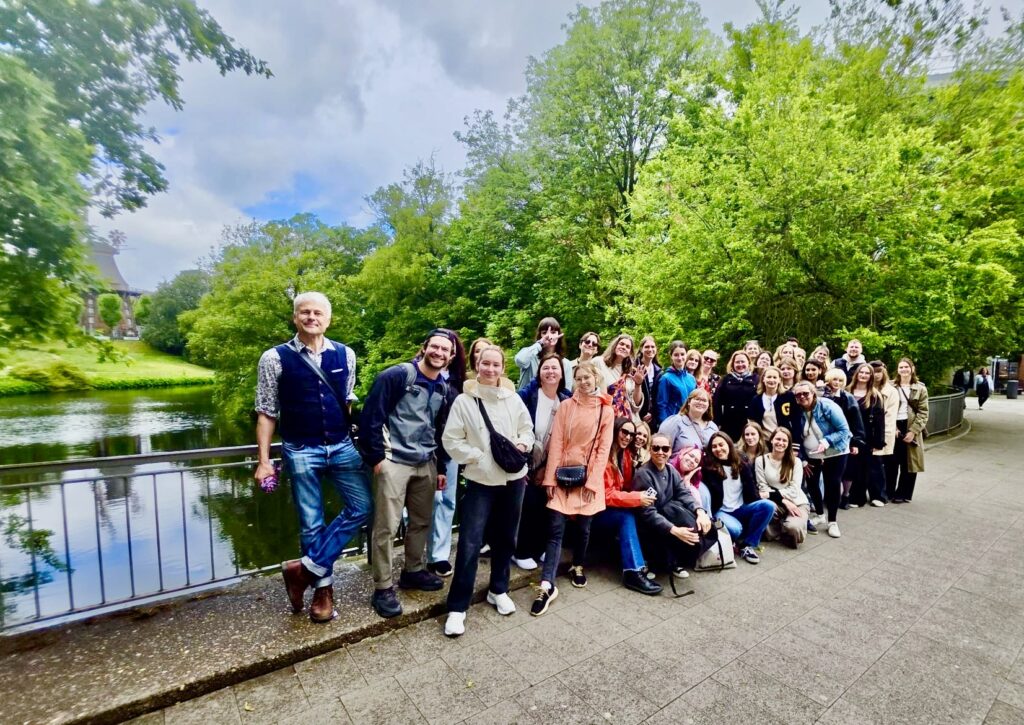
From 17 to 22 May, 2026, the week-long rotating Blended Intensive Programme (BIP) “Cultural and Social Well-Being – Identity and Participation” took place at the University of Vechta (Germany). This BIP was held in Finland last year with other students and could move to Vienna next year.
Thirty-five students from eight universities in various countries participated: Savonia University of Applied Sciences, Finland; five students from the mdw; Algoma University, Canada; University of Trieste, Italy; Bournemouth University, UK; Vilnius University Šiauliai Academy, Lithuania; Petro Mohyla Black Sea State University, Ukraine; and Tallinn University, Estonia. The two program coordinators, Magnus Frampton (University of Vechta) and Hanna Turunen (Savonia University of Applied Sciences), had prepared an exciting week full of interdisciplinary encounters.
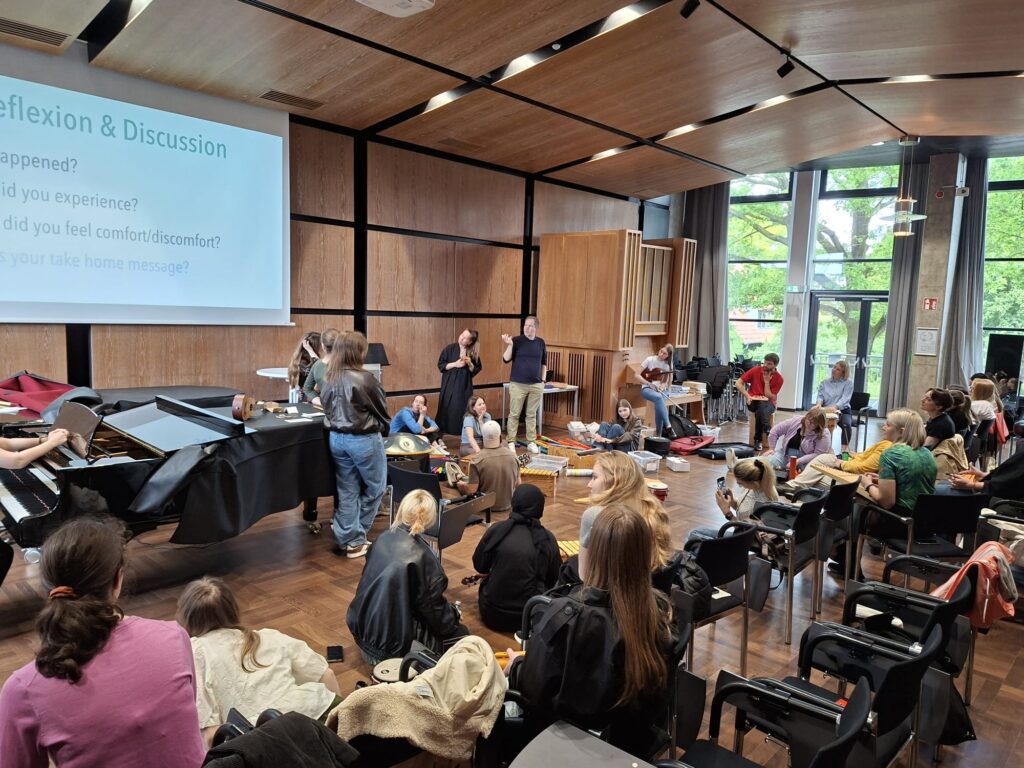
The week began with the two mandatory Zoom meetings, typical of every Blended Intensive Programme, which provided substantive input. On 7 May, I had the opportunity to present to the international students about curricula and study profiles that address cultural and social participation and inclusion in music-making at the mdw and the Department of Music Education Research and Practice.
A significant portion of the students’ work involved creative methods in a series of predominantly practice-oriented units.
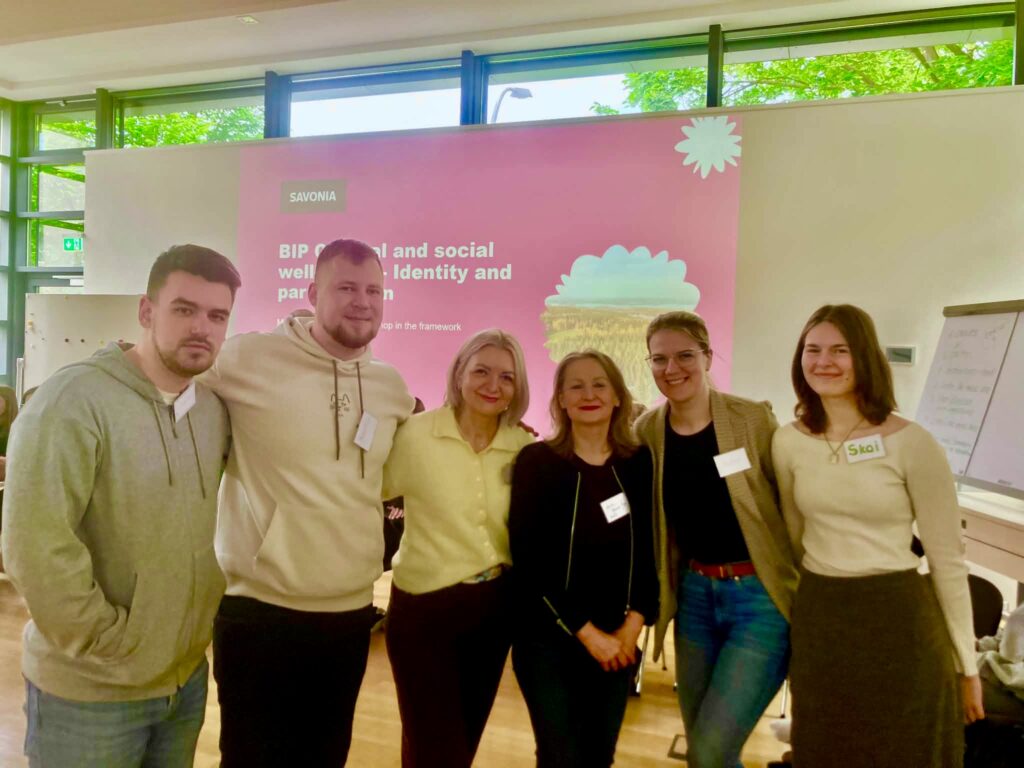
They reflected on their identity using intersectionality concepts, collaborated with students from other countries to develop a Pecha Kucha presentation based on their learning experiences from the week, and presented their home countries in a 45-minute activity during the intercultural evening. International small-group work was central to the learning experience. The students acquired new skills, particularly in the use of creative methods and in intercultural teamwork.
The strengthening of European values through the International Programme was particularly noteworthy, namely the appreciation of diversity, the recognition of differences, but also the reflection on commonalities.
There were also numerous connections to the Sustainable Development Goals: SDG 3 – Good health and well-being through the on-site discussion with the director of a children’s home. SDG 4 – Quality education through workshops on identity and intersectionality and the promotion of creative and critical skills. SDG 5 – Gender equality through the workshop on gender and identity constructions. SDG 16 – Peace, justice and strong institutions through intercultural exchange and reflections on national and social identities. SDG 17 – Partnerships for the goals through our international collaboration and cooperation between various disciplines such as (music) education, social work, music, and dance.
Now we are curious to see if this BIP will actually rotate to the mdw in Vienna in 2027.